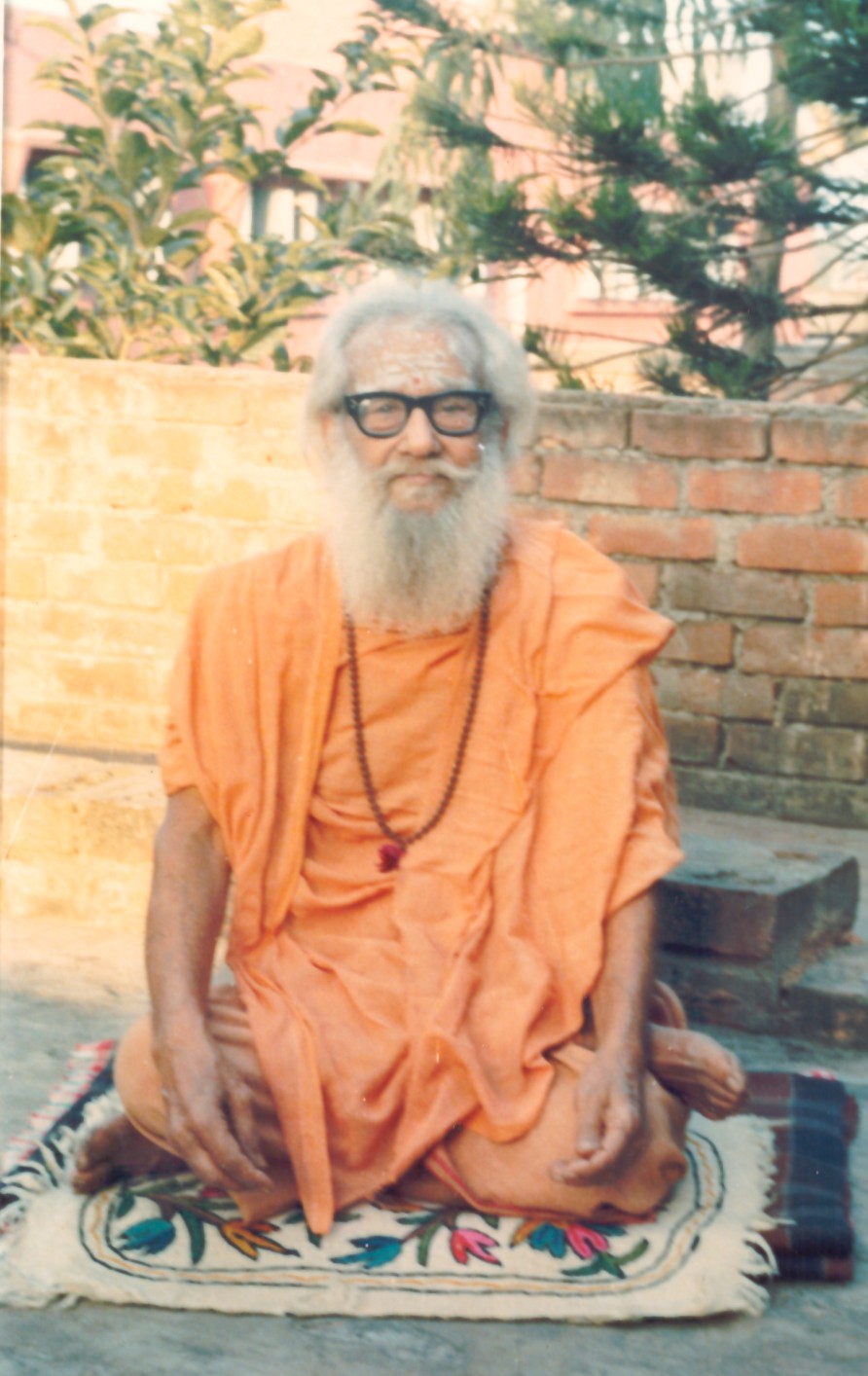
Among the many noble souls who have been associated with Mahesh Shri Ramakrishna Ashram, the memory of Revered Swami Vibhananda Maharaj occupies a special place in the hearts of devotees, students, monks, and well-wishers. His life was not marked by public fame or institutional prominence; rather, it was distinguished by quiet dedication, simplicity, affectionate concern for others, and unwavering devotion to spiritual ideals. Those who came into contact with him invariably remember his smiling face, gentle words, and compassionate presence.
Before embracing the monastic life, Swami Vibhananda Maharaj was known by his pre-monastic name, Beni. Although detailed records of his childhood and family background are not readily available, those who knew him in later years occasionally recalled his simplicity and humble nature, qualities that remained with him throughout his life. After coming into contact with the spiritual ideals of Sri Ramakrishna and the Ramakrishna movement, Beni gradually developed a deep attraction towards monastic life and spiritual discipline. This aspiration ultimately led him to join Belur Math, where he came under the guidance of Revered Swami Virajananda Maharaj and began his lifelong journey of spiritual pursuit and service.
Swami Vibhananda Maharaj entered the spiritual path through his association with the Ramakrishna Order at Belur Math. During his formative years, he came under the spiritual guidance of Revered Swami Virajananda Maharaj, the sixth President of the Ramakrishna Math and Ramakrishna Mission. As a disciple of such an illustrious spiritual leader, he imbibed the ideals of renunciation, devotion, self-discipline, and service to humanity.
Belur Math, the headquarters of the Ramakrishna Order, was a vibrant centre of spiritual practice and monastic training. It was here that the young aspirant absorbed the teachings of Sri Ramakrishna, Holy Mother Sri Sarada Devi, and Swami Vivekananda. The atmosphere of spiritual discipline and selfless service left an indelible impression on his life and character.
In 1948, after years of association with the Ramakrishna Order, Swami Vibhananda Maharaj left Belur Math and pursued an independent spiritual course. Though he formally separated from the Order, the spiritual values he had imbibed there remained the guiding force of his life.
Following his departure from Belur Math, Swami Vibhananda Maharaj established an ashram near Tollygunge, Kolkata. This phase of his life demonstrated his courage, initiative, and commitment to spiritual service. The ashram became a place where seekers and devotees could gather for worship, spiritual discussions, and guidance.
His approach was never authoritarian. Rather, he sought to lead through personal example. His life of simplicity, austerity, and devotion attracted sincere seekers. Those who visited him often felt a sense of peace and spiritual reassurance in his presence.
For more than a decade, he dedicated himself to the growth and maintenance of this institution. Around 1960, however, he voluntarily relinquished his connection with the ashram. Such detachment reflected his monastic temperament. He was never attached to position, property, or personal achievement. For him, spiritual life was always greater than institutional identity.
After leaving his self-established ashram, Swami Vibhananda Maharaj became permanently associated with Mahesh Shri Ramakrishna Ashram. This marked the beginning of a long and fruitful relationship that continued until the end of his earthly life.
Mahesh Shri Ramakrishna Ashram, founded upon the ideals of Sri Ramakrishna and dedicated to spiritual and educational service, found in him a devoted well-wisher and guide. Although he never sought administrative authority, he became an important member of the Executive Committee and contributed significantly to the development of the Ashram.
His presence brought stability, wisdom, and spiritual inspiration. Many important discussions concerning the welfare of the institution benefited from his mature judgment and practical insight. He possessed a remarkable ability to balance spiritual ideals with the practical necessities of institutional life.
Unlike some who lead through command, Swami Vibhananda Maharaj influenced others through affection and personal example. His advice was sought not because of formal authority but because people trusted his sincerity and wisdom.
One of the most memorable aspects of Maharaj’s life at Mahesh Shri Ramakrishna Ashram was his close relationship with students. The Ashram’s educational activities occupied a special place in his heart. He believed that education should not merely impart knowledge but should also cultivate character, discipline, and spiritual values.
Students often found in him a sympathetic elder who listened patiently to their concerns. His words were simple, practical, and encouraging. He rarely delivered lengthy sermons; instead, he preferred brief observations that touched the heart and remained in the memory.
Former students would later recall how a few minutes spent in his company could dispel anxiety and restore confidence. His blessings were sought before examinations, important decisions, and life-changing events. Many regarded him as a spiritual guardian whose concern extended far beyond the boundaries of the institution.
Devotees similarly experienced his kindness and accessibility. Visitors were welcomed with warmth and treated with respect regardless of social status or background. His room often became a place where troubled minds found comfort and direction.
Those who knew Swami Vibhananda Maharaj invariably remember his smiling face. Even during periods of physical suffering or institutional challenges, he maintained a cheerful disposition.
His smile was not merely an expression of temperament; it reflected an inner spiritual contentment. He possessed a rare ability to put people at ease. Visitors who approached him with hesitation often left feeling encouraged and uplifted.
The Ashram staff also benefited from his affection and understanding. He appreciated their contributions and treated them with dignity. His concern extended to every section of the Ashram community—monks, brahmacharins, students, employees, devotees, and guests.
Many old devotees remember that he rarely spoke harshly. When correction became necessary, it was administered with kindness rather than severity. This quality earned him universal respect and affection.
Although not inclined toward public display, Swami Vibhananda Maharaj maintained a deep spiritual life. Regular worship, prayer, meditation, and remembrance of the Divine formed the foundation of his daily routine.
He believed that spiritual life should manifest itself through conduct. For him, humility, truthfulness, self-control, and service were practical expressions of devotion. He taught more through example than through formal instruction.
His reverence for Sri Ramakrishna, Holy Mother Sri Sarada Devi, and Swami Vivekananda remained unwavering throughout his life. The ideals of universal love, harmony, and service found natural expression in his dealings with others.
Advancing age gradually brought physical infirmities. Like many elderly monks, Swami Vibhananda Maharaj experienced various age-related ailments. Yet those who attended him during these years observed that his spiritual composure remained undisturbed.
Even when confined by illness, he continued to receive visitors and offer blessings. His concern for the welfare of the Ashram never diminished. He followed its activities with keen interest and rejoiced in its progress.
The younger generation of monks and devotees particularly benefited from his presence during these final years. His life itself became a lesson in patience, acceptance, and spiritual resilience.
On 2 May 1995, at 3:45 p.m., Swami Vibhananda Maharaj breathed his last at Mahesh Shri Ramakrishna Ashram. He was 83 years old.
The news of his passing spread rapidly among devotees and admirers, bringing profound sorrow to all who knew him. Yet amidst the grief there was also a sense of gratitude for a life so nobly lived.
Following the traditional rites, his mortal remains were taken to Shibtala Burning Ghat at Uttarpara-Kotrung, where the final cremation ceremony was performed. Monks, devotees, students, and admirers gathered to pay their last respects to the revered monk who had enriched their lives through his example.
On 14 May 1995, a Sadhu Bhandara and memorial observance were held in accordance with monastic tradition. Monks from various centres, devotees, and well-wishers assembled to honour his memory and offer prayers.
More than three decades have passed since the physical departure of Swami Vibhananda Maharaj, yet his memory continues to live in the collective consciousness of Mahesh Shri Ramakrishna Ashram.
His contribution cannot be measured merely through buildings erected, committees served, or administrative decisions made. His true legacy lies in the lives he touched, the values he embodied, and the spiritual atmosphere he helped nurture.
For countless devotees, he remains the smiling monk whose kindness brought comfort. For students, he remains a source of inspiration and guidance. For the Ashram, he remains a symbol of selfless dedication and unwavering loyalty.
The life of Swami Vibhananda Maharaj reminds us that greatness is often found not in public recognition but in quiet service, humility, and steadfast devotion to God and humanity. His sacred memory continues to inspire all who are associated with Mahesh Shri Ramakrishna Ashram, and his blessings remain a cherished spiritual inheritance for future generations.
“May the life of Revered Swami Vibhananda Maharaj continue to inspire us to live with simplicity, compassion, dedication, and unwavering faith in the ideals of Sri Ramakrishna.”

